
Product Focus
Tactiles
The Definitive Freedom Works Guide to Tactile Indicators
You’ve seen tactile indicators before, though you may not have known what they were called. They’re the bright yellow studs at the edges of the kerb along public walkways. Invented by Seiichi Miyake in Japan in 1976, these architectural details help visually impaired and blind people navigate their environments safely and comfortably. Yet poor design and substandard installation prevent them from being used to their best advantage throughout New Zealand – an issue that Freedom Works is fighting to address.
What are tactile indicators?
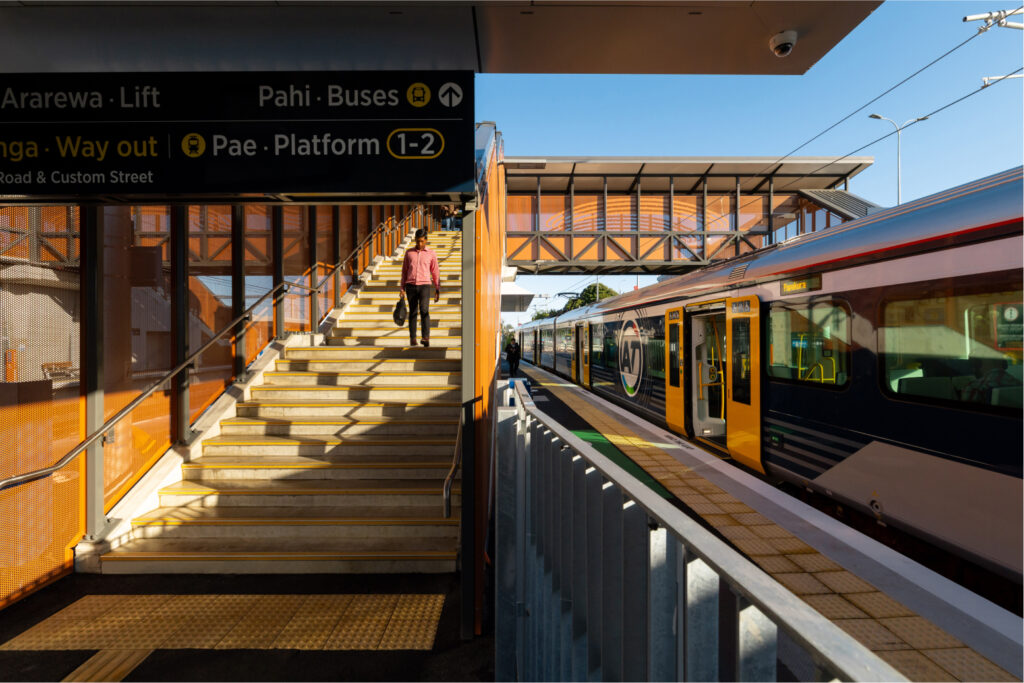
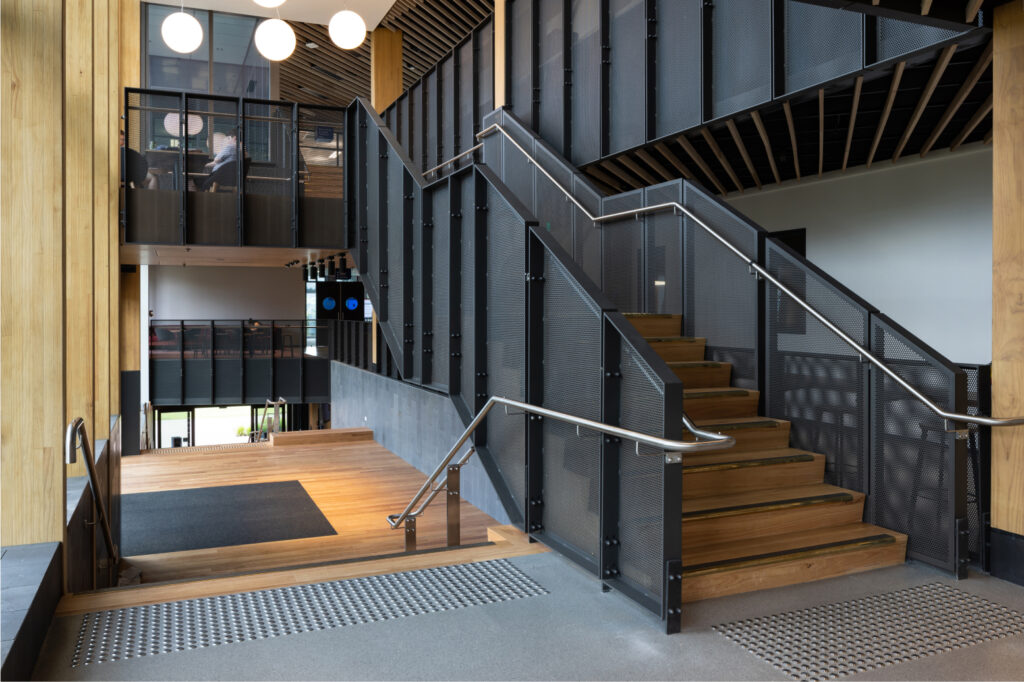
Tactile indicators are multisensory cues that alert pedestrians to changes in their environment. Dome-shaped studs warn people about nearby hazards, such as staircases, roads, and train platforms, whereas bar patterns direct people towards safe paths of travel. Visually impaired pedestrians can feel these textured details underfoot, with a cane, or with the assistance of a guide dog. Pedestrians might also visually detect the tactile indicators through colour contrast with the surrounding substrate.
Tactile indicators therefore prevent accidents and minimise the risk of injury, helping visually impaired people to access, navigate, and enjoy built environments.
How are tactile indicators designed?
Tactile indicators are commonly made from polyurethane, stainless steel, and concrete. Polyurethane is a less costly material, but it degrades more quickly than other materials, which may lead to higher maintenance costs over time. Stainless steel, on the other hand, is a durable material that can be powder-coated in various colours. Concrete pavers – rectangular yellow blocks with stud or bar designs – are heavy-duty options that are ideal for outdoor environments, and Freedom Works’ concrete pavers are specifically designed to endure the weight of vehicles passing overhead.
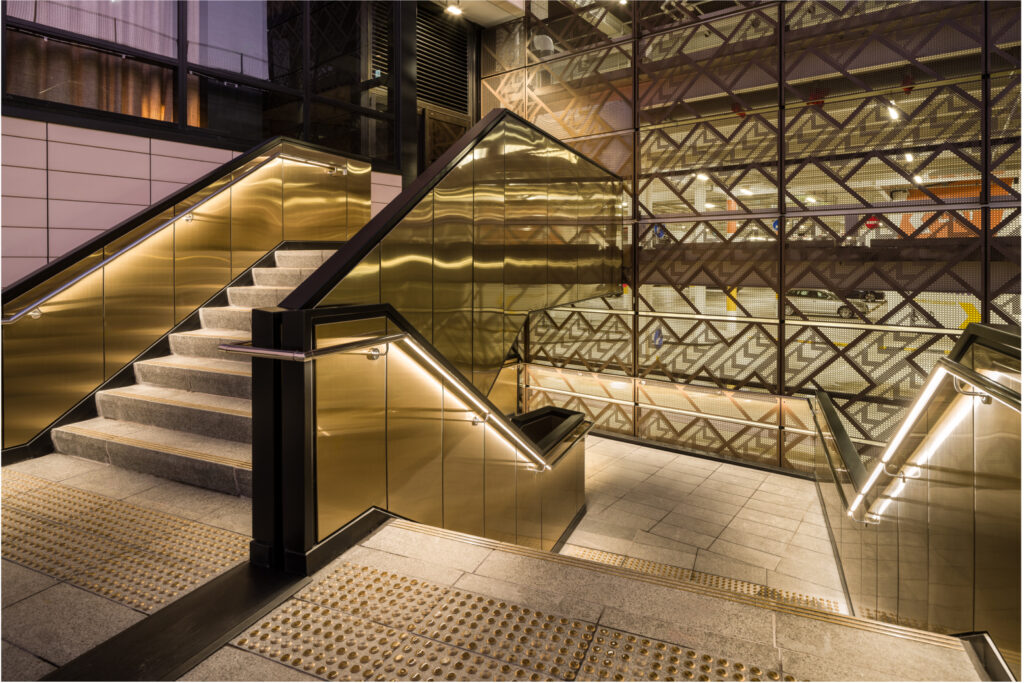
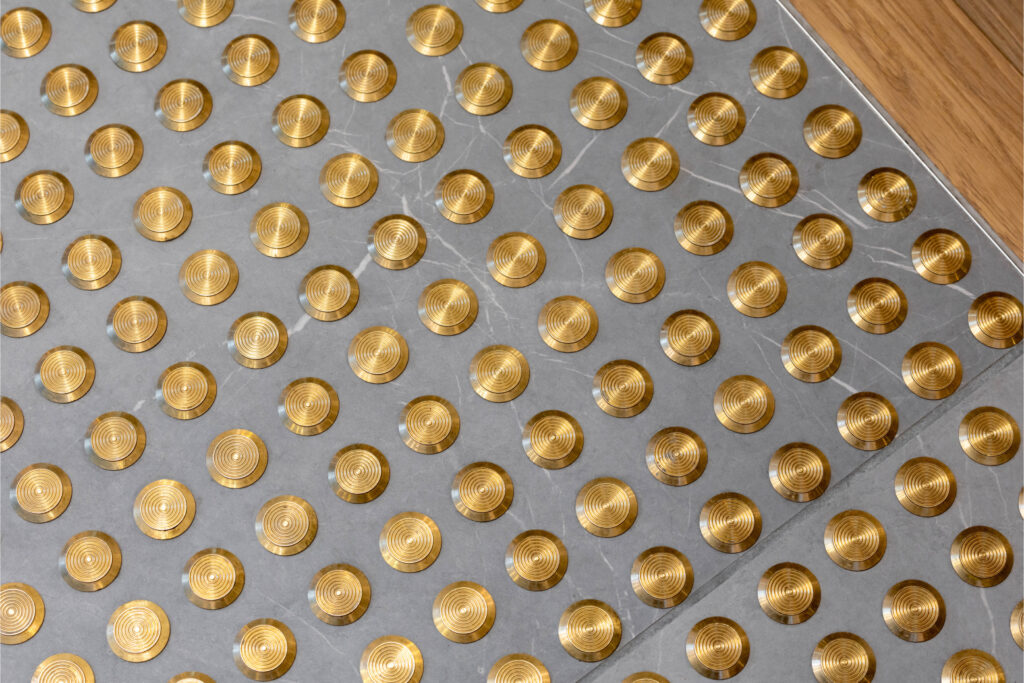
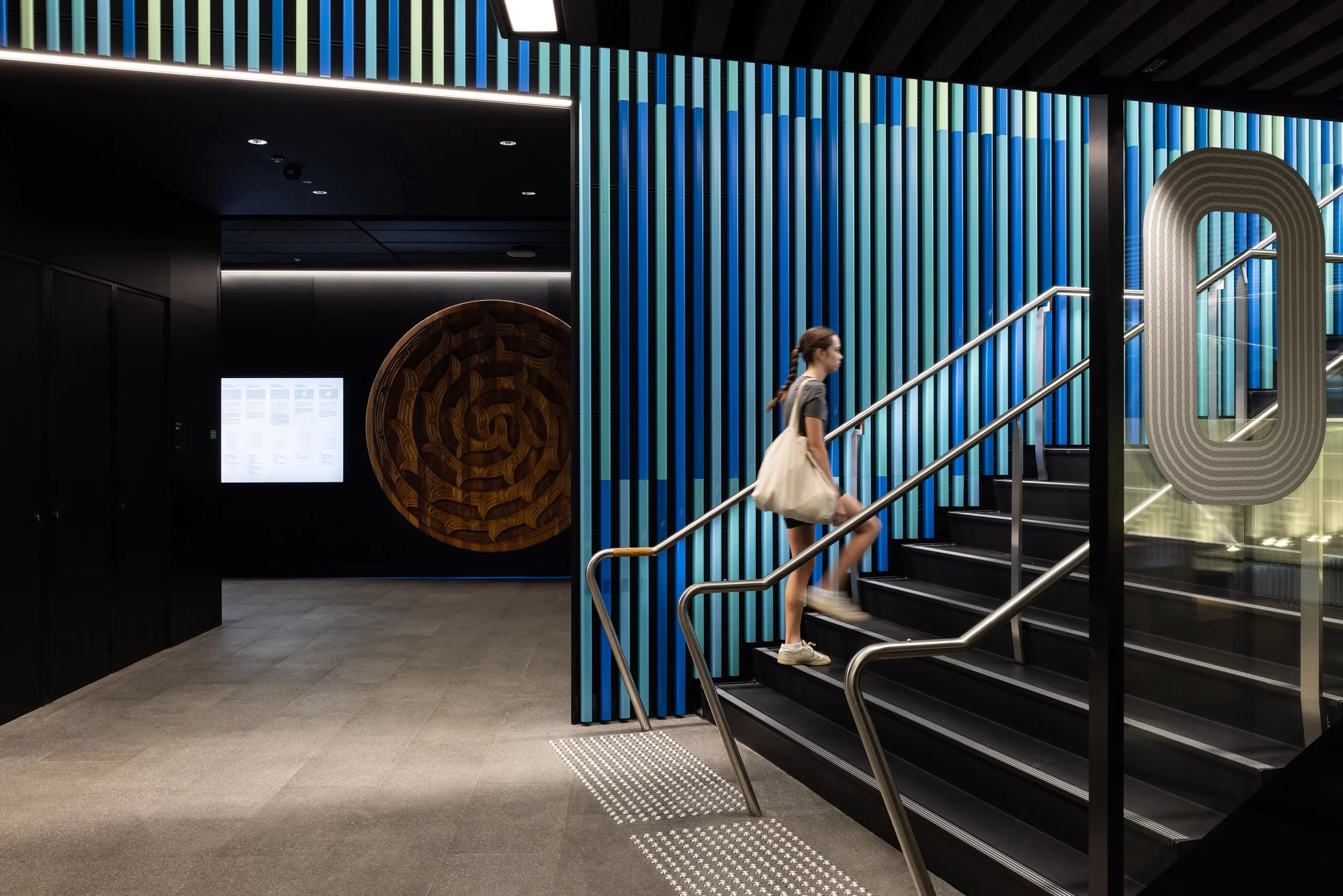
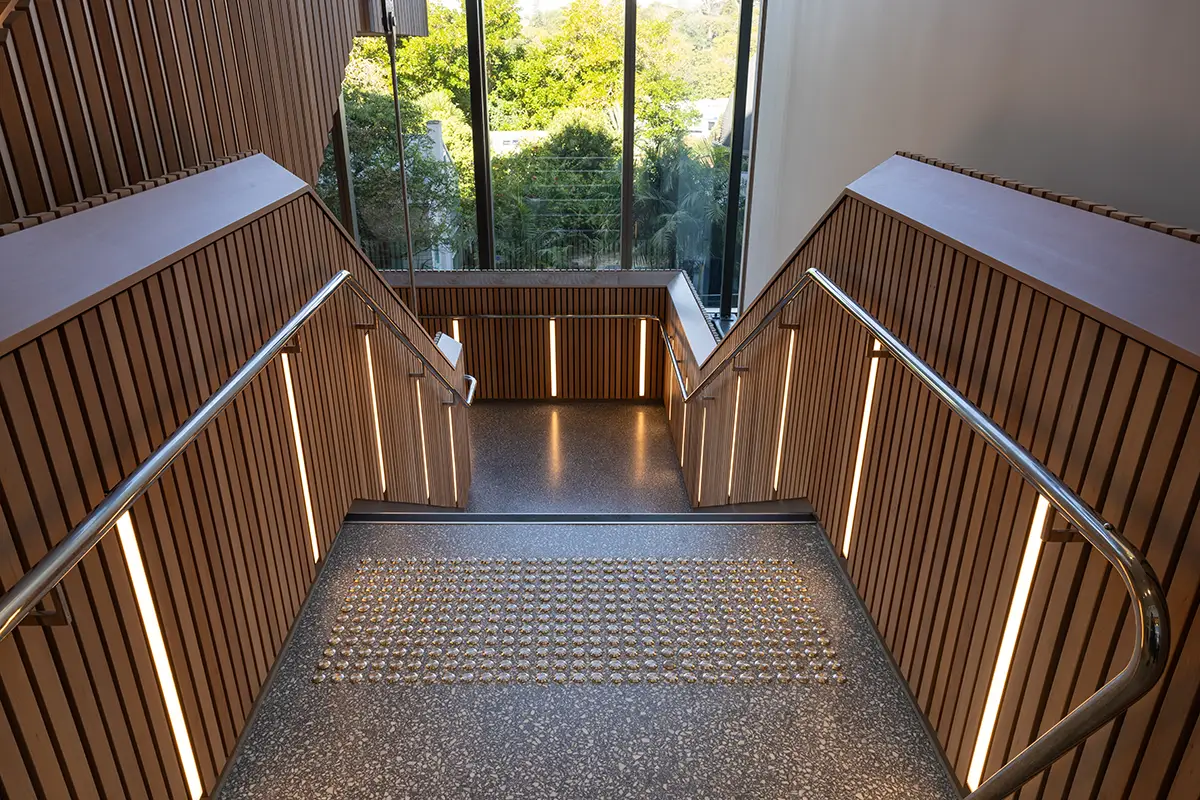
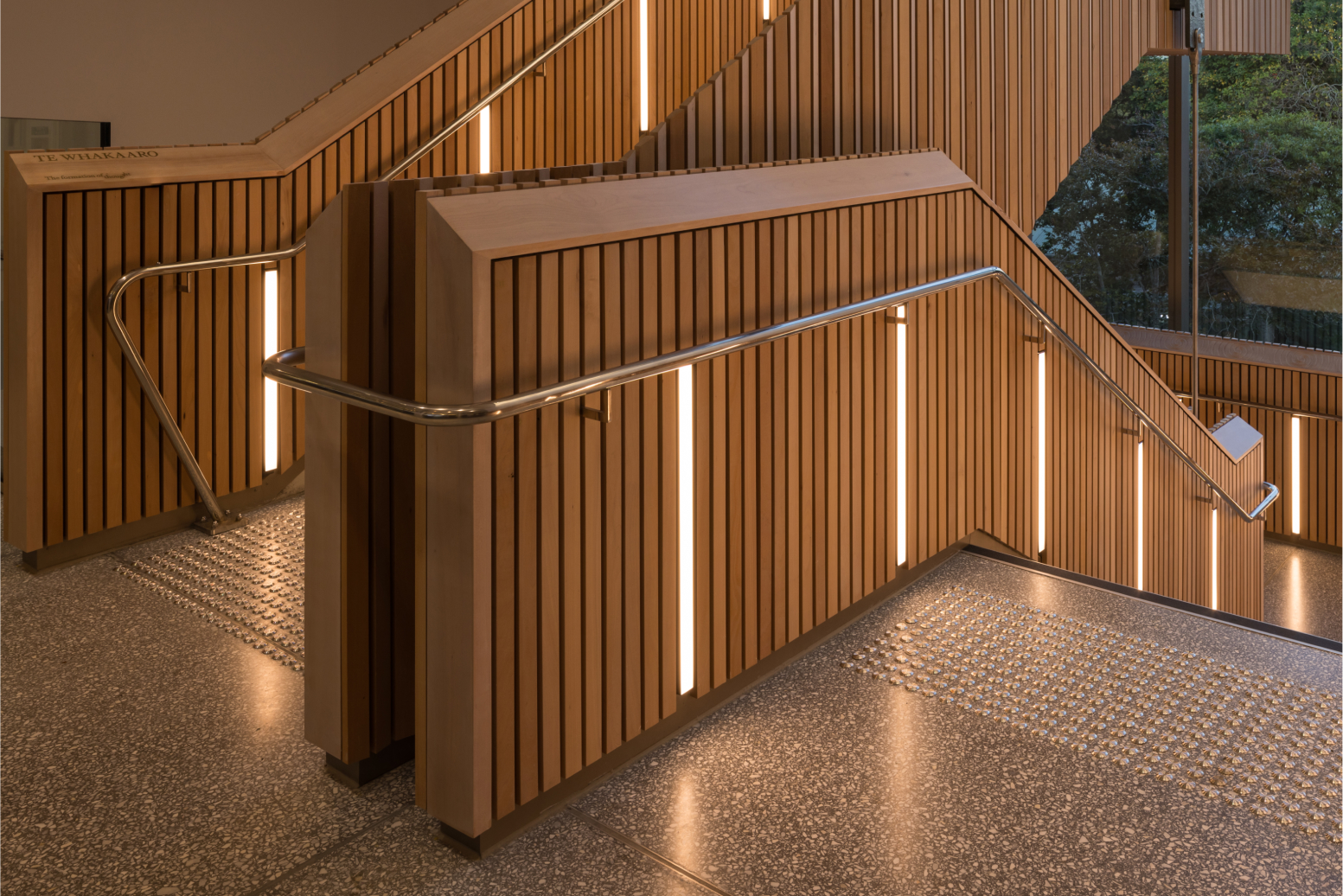
Unlike many other tactile indicator suppliers, Freedom Works also offers a state-of-the-art carborundum tactile range. Carborundum is an extremely hard-wearing material that can withstand heavy traffic, so it maintains a longer lifespan, which reduces replacement costs over time. Freedom Works was the first tactile indicator supplier in New Zealand to experiment with carborundum, and we have been resoundingly successful in employing these products around New Zealand. These specialised tactiles have a composite structure with a carborundum centre and a stainless steel or brass border, creating many opportunities for visual customisation.
Freedom Works also offers solid brass tactile indicators for environments that require an elegant touch, so that designers aren’t forced to choose between accessibility and aesthetics.
How can I make my tactile indicators more effective?
Tactile indicators are required by law in many architectural environments, but the Building Code does not always stipulate the exact type of tactile indicator that must be used, nor the optimal manner in which to apply them. Consequently, many buildings are accessible for visually impaired people on paper but difficult to navigate in reality.
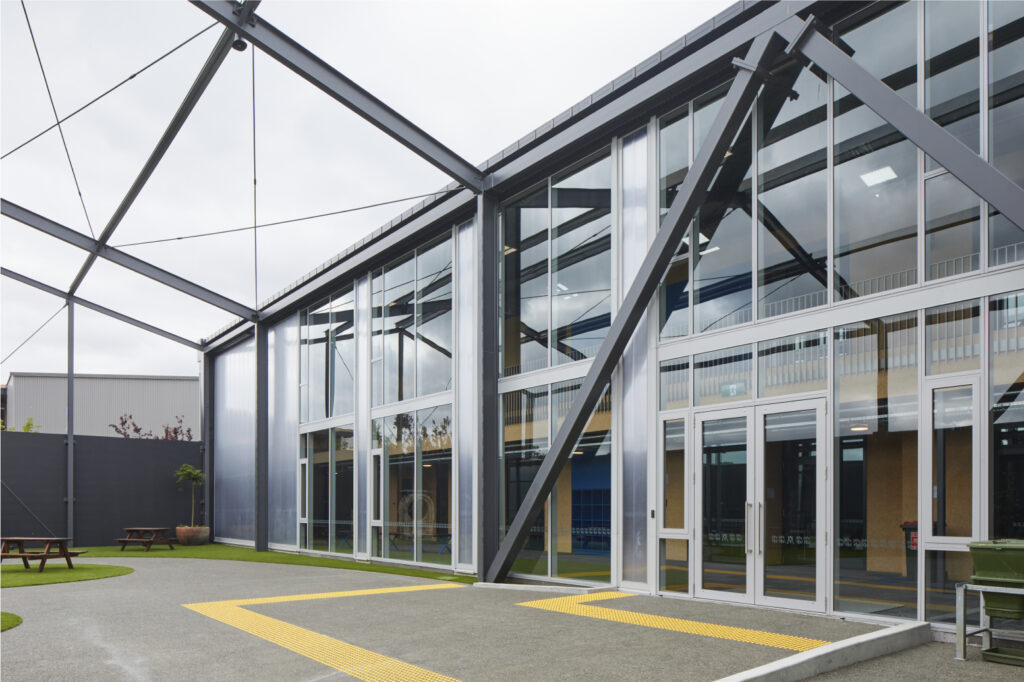
A common pitfall in tactile indicator use is incorrect spacing. Stud tactiles should ideally be placed at 50mm centres; this gap is narrow enough to ensure that visually impaired users strike the indicators with foot or cane, but wide enough to let wheelchairs roll through. Tactiles should also be installed at a minimum of 300mm from the edge of the kerb so that the pedestrian strikes them and stops at a safe distance from the road. Also, when a guide dog stands at the front edge of a tactile block, its head will naturally hang forward; if the tactile installation is too close to the roadside, the dog may be struck by vehicles. Furthermore, tactile indicators should take up at least a space of at least 300x300mm. This ensures that the majority of people will step onto it as they walk, instead of accidentally stepping over it and missing the navigational cue.
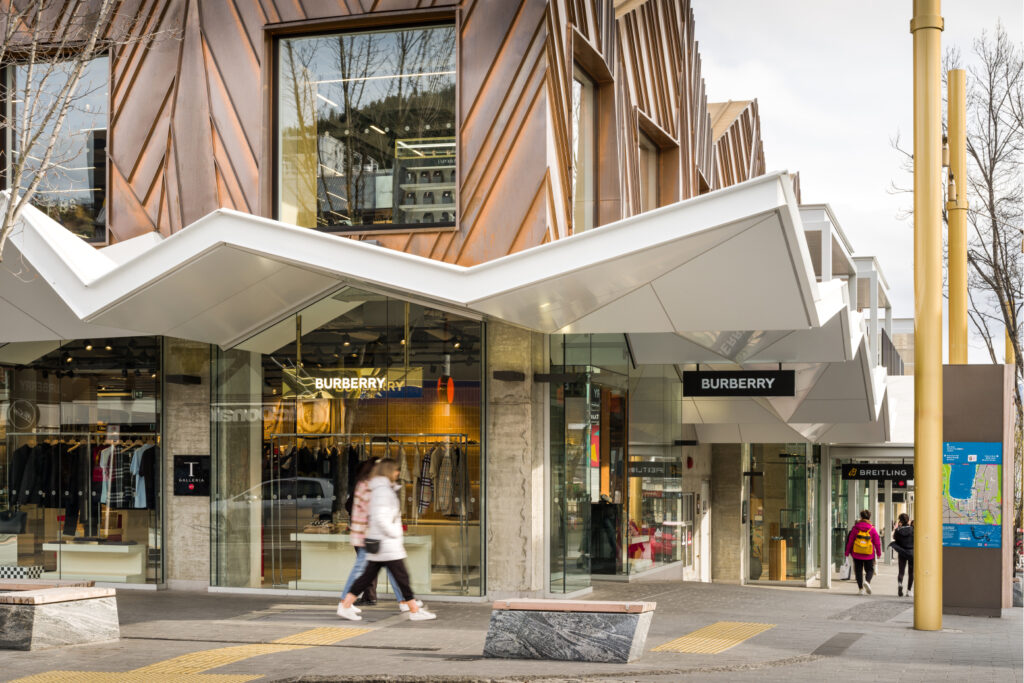
Colour contrast is another neglected element of tactile indicator design. Architects often shy away from using bright yellow tactile indicators to avoid compromising their design scheme, but yellow is the most noticeable colour for most visually impaired people as it achieves high contrast with the surrounding environment. Additionally, when a person starts losing their vision or the ability to see colours, yellow is usually the last colour that they can still detect when all other colours have become imperceptible. If yellow is not an option, then we suggest paying attention to the colour contrast created between the tactile, the substrate (or carpet), and other trimmings in the environment, and leveraging this contrast to ensure that key navigational points can be detected and safely traversed.
On a more sombre note, Freedom Works has seen a shocking lack of common sense in tactile installation around New Zealand. We know that most architects and urban designers genuinely want to make a difference for their visually impaired end users, but unfortunately, there are cases where tactile indicators have been installed in a dangerous manner. For instance, if you are installing directional tactile indicators, you must ensure that they actually point people towards a safe route –not out into the road, as is the case with some tactile indicators in high traffic locations in Auckland.
We've also heard of numerous incidences where architects have overused tactile indicators to such a high degree that the end result is incomprehensible to visually impaired people.
Not sure whether your tactiles are actually going to make a difference for vulnerable communities? Blind Low Vision NZ and other accessibility organisations can help verify the effectiveness of your plans, which is certainly an improvement on the guess-and-hope design method that we currently seem to favour in New Zealand.
How are tactile indicators installed?
Freedom Works routinely engages with accessibility organisations to make sure we're using best practice in our tactile installations. We then use these learnings to guide architects and contractors, making sure that tactiles are installed where they’re actually needed, and that they’re not overused in a manner that might confuse pedestrians or guide dogs.
Freedom Works will also usually install our own tactiles, eliminating the possibility of incorrect detailing. We also offer a range of installation methods to cover the needs of different projects. For example, we offer stick-down installation when tactile indicators are only temporarily needed. In other cases, we use durable, long-lasting installation methods that are optimised for the substrate and the weather conditions.
Are tactile indicators environmentally sustainable?
Most of Freedom Works’ tactile indicators are made from sustainable materials. Our stainless steel, brass, aluminium, and santoprene components are partially made from recycled materials, and they can be recycled in turn at the end of their lifespan.
Our carborundum products cannot be recycled; however, these durable products do not need frequent replacement, thus cutting down on materials waste.
Freedom Works is also committed to using sustainable manufacturing and installation practices where possible. We understand that sustainability comprises of intertwined factors such as the material used in construction, the processes of manufacturing and installing the tactile, and the maintenance of the product over time. Accordingly, we push ourselves to optimise every aspect of our processes, such as by pursuing Declare labels to verify that our products aren't environmentally hazardous.
Stay up to date
Freedom Works recommends partnering with trusted suppliers and accessibility experts to guide you towards best practice and code compliance. Accessibility is an ever-changing field of design, and it is crucial to stay up to date with industry knowledge.
We're personally grateful for the guidance we've received from the Blind Low Vision NZ team, and we intend to keep refining our designs so that the visually impaired community continues to benefit from our work around Aotearoa.